

Many parents still treat play as a break before “real learning” begins. In Froebel pedagogy, that assumption is reversed: meaningful play is how children naturally understand the world, build focus, and lay long-term academic foundations. This article explains how to practice meaningful play at home and at school, and how it connects with the holistic education approach at Institut Froebel.
Why meaningful play is not mere entertainment
When children stack blocks, they practice spatial planning, patience, and repairing mistakes. When they role-play as doctors or market sellers, they expand language, empathy, and social rules. These activities look light, yet they demand complex thinking: observe, predict, try, fail, and try again. That is the learning cycle every modern educator wants—expressed through the language children know best: play.
At Institut Froebel, play is not the opposite of literacy or numeracy. Play is the bridge to both. Children who explore form and pattern through play are often better prepared for number concepts. Children who invent stories in role play usually find reading and writing more meaningful. Healthy classrooms and homes therefore protect time for meaningful play, even when assessment seasons feel busy.

Three marks of growth-supporting play
First, there is an adult purpose without forced pressure. Adults prepare a rich environment—natural materials, blocks, art tools, books—then give children room to choose. Goals such as fine-motor practice or vocabulary growth live in the educator’s mind, not as commands that shrink curiosity.
Second, process matters more than perfect products. A tower that falls is not shame; it is data. Children learn that experimentation is part of intelligence. Adult language shapes this: “What would you like to try next?” builds far more resilience than “Why did it collapse?”
Third, warm human interaction is present. Meaningful play rarely thrives in total isolation. An adult who observes, asks genuine questions, and occasionally joins without taking over helps children feel valued. That relationship becomes the confidence base that later supports academic persistence.
At home: simple, consistent, rich in meaning
You do not need expensive toys. A basket of fabric scraps, wooden spoons, clean stones, paper, and crayons can open hundreds of possibilities. Protect a daily screen-free play window—even thirty minutes—and stay emotionally present. Notice this week’s interest: building, drawing, or storytelling? That interest is the doorway to a home curriculum.
Invite children into safe household work: sorting vegetables, watering plants, arranging books. In a Froebel frame, everyday life is a laboratory. Children learn sequence, responsibility, and a sense of capability. When they ask “why,” answer briefly and invite testing: “Shall we try and see what happens?”
At school: what parents should notice
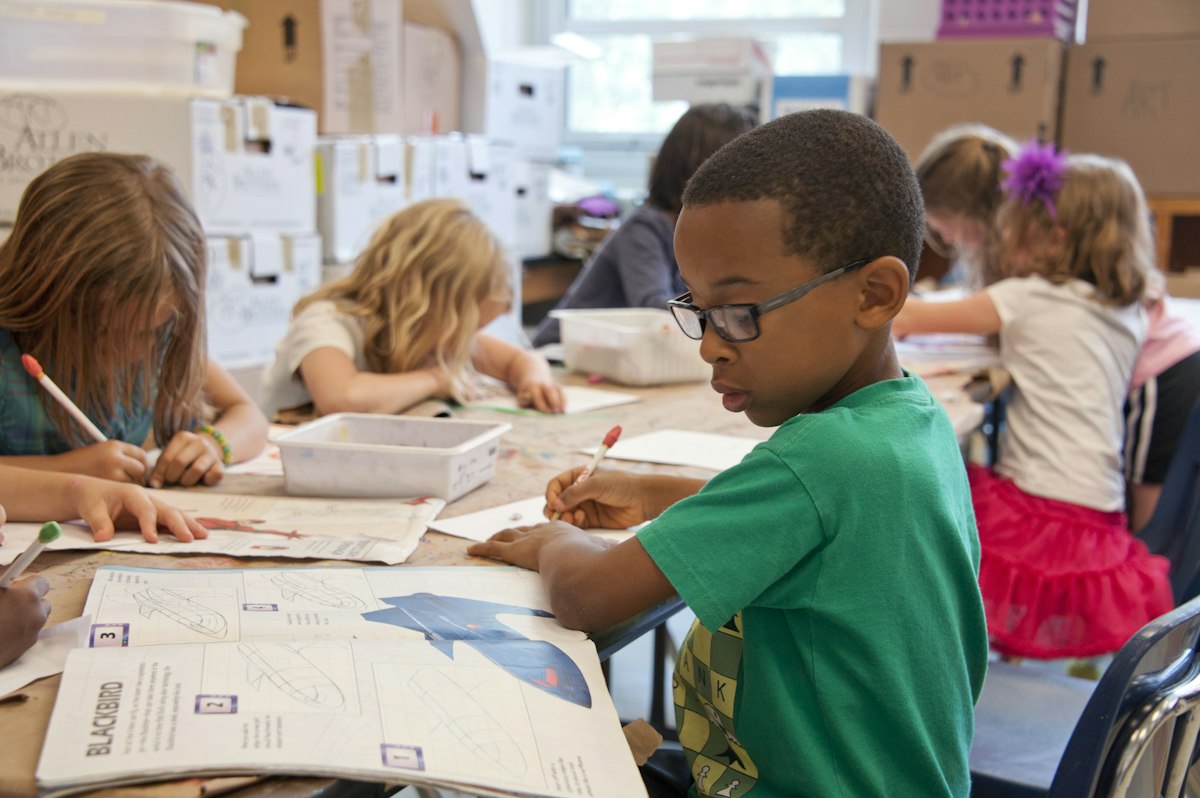
On school visits, check whether play still appears in the timetable, or only in brochures. Quality classrooms usually have living exploration corners, not static displays. Teachers can explain how specific play connects to developmental goals—without turning play into disguised worksheets. If you are comparing schools, our guide on how to choose a quality school can help you ask sharper questions.
At Institut Froebel, educators are trained to observe interests, document process, and adjust challenge. A highly visual child may receive more model-building opportunities; a verbal child may expand storytelling. Differentiation keeps play meaningful for each learner rather than identical for all.
Bridging home and school
Message consistency matters. If school treats mistakes as learning data, but home answers every error with anger, children receive colliding signals. Ask teachers what the class is exploring, then mirror it at home in a realistic scale. If the class studies patterns, invite your child to make patterns with leaves or bottle caps in the kitchen.
Document small moments: photos of process, not only finished products. Ask children what they felt while playing. Those conversations train metacognition—thinking about how they learn—which becomes invaluable in later academic years.
Common mistakes to avoid
Parents often turn play into disguised drills: “Count first, then you may play.” That pattern links play to conditions and weakens intrinsic motivation. Instead, let play flow, then weave conceptual language naturally once the child is engaged. A second mistake is comparing one child’s work with another’s. Comparison erodes safety and turns exploration into status competition.
A third mistake is outsourcing all stimulation to interactive screens. Educational apps can complement learning, but they cannot replace touch, whole-body movement, and face-to-face interaction. Froebel emphasizes concrete experience because body and mind learn together. When children only swipe glass, many sensorimotor pathways stay inactive. Limit screens and prioritize real experience—especially in early childhood and the early primary years.
Finally, do not treat quiet watching as inability. Some children need observation time before joining play. Give them space without forcing “more activity.” Patient presence often opens more authentic participation than rushed prompting. Over time, children whose rhythm is respected tend to take healthier learning risks.
Conclusion
Meaningful play invests in curiosity, resilience, and thinking. With a rich environment, warm adult presence, and aligned home–school partnership, children grow as whole learners—not mere memorizers. That is the Froebel essence we live daily at Institut Froebel: academic strength without sacrificing wellbeing and joy in learning.